Contemporary Dance in Oslo's Landmark Buildings: Your Guide to CODA 2026
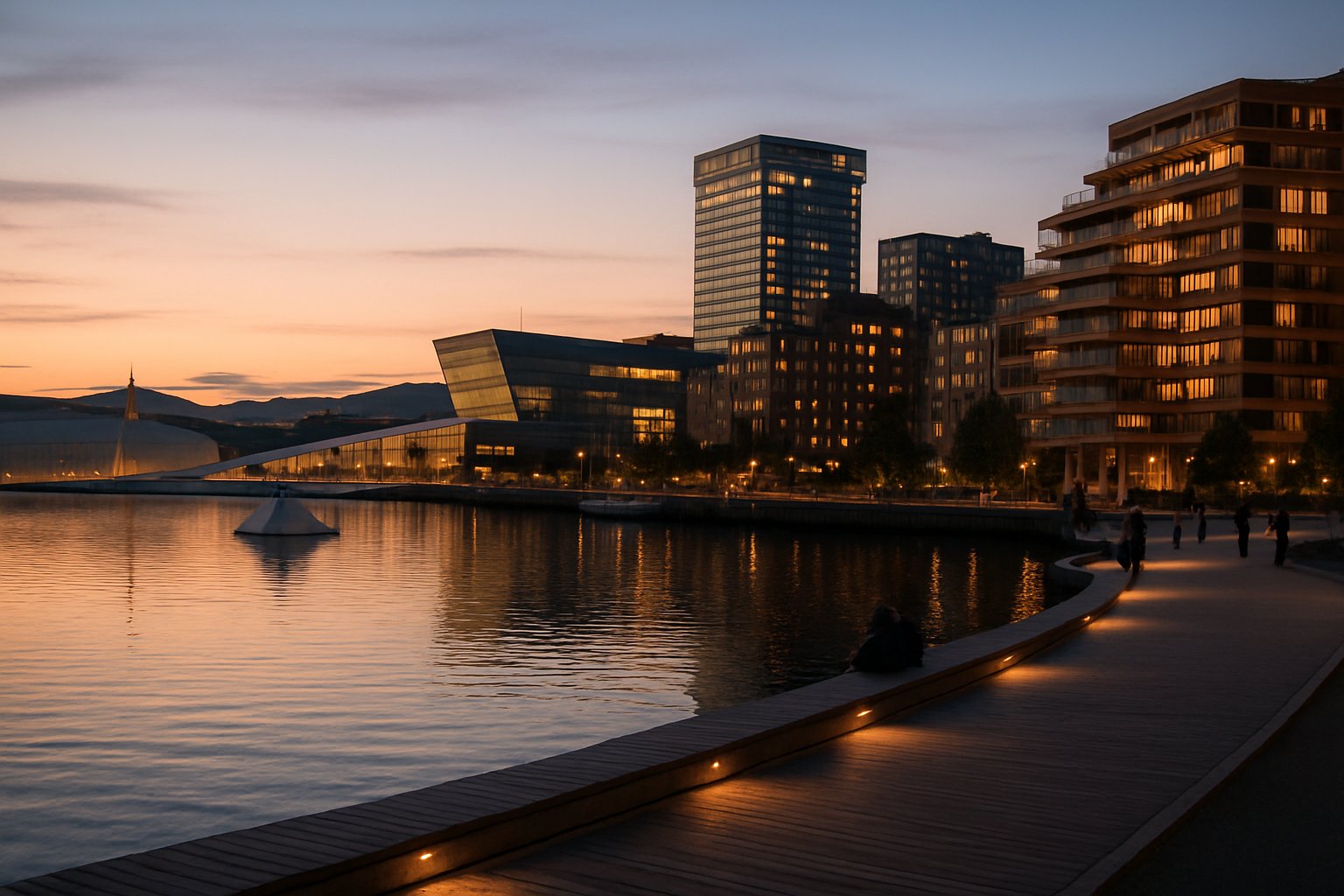
From 8 to 18 October, the Nordic region's largest contemporary dance festival takes over MUNCH, Deichman Bjørvika, the Opera House and Dansens Hus. Here is how to see CODA 2026 and fit a show into a walk along the Bjørvika waterfront.
CODA Oslo International Dance Festival opens tomorrow and runs from 8 to 18 October 2026. It bills itself as the largest contemporary dance festival in the Nordic region.
CODA does not keep to conventional stages. Much of the programme is set in Oslo's best-known buildings, so you often watch the dance and the architecture together.
Why the venues matter
CODA has a habit of putting dance where you don't expect it.
For 2026 the festival is spread across Oslo's main cultural institutions. These include MUNCH, Deichman Bjørvika, the Opera House and Dansens Hus.
Several of these venues stand within a short walk of each other on the Bjørvika waterfront. That makes it easy to build an afternoon or evening around a performance.
The Bjørvika cluster
MUNCH
The tall, leaning tower of MUNCH, designed by Spanish architect Juan Herreros, is the most striking building on the harbour. It is the setting for FRANK by Cherish Menzo (Netherlands/Belgium), on 8 and 9 October at 20:30 (doors 20:00) in the Festsal. The age limit is 16, and the performance uses strobe lighting, haze and loud music.
MUNCH is a few minutes' walk from Oslo Central Station. The Bjørvika tram stop is right by the building.
Deichman Bjørvika
Oslo's main public library faces the Opera House across the plaza. Its open, light-filled floors are already one of the city's favourite places to spend an afternoon.
Mid-festival, Norwegian choreographer Siri Jøntvedt and students from HDFK perform Om å innta et torg (roughly, "On taking over a square"). It is listed for 14–16 October. The work is about public space, which suits a building designed as a meeting place for the whole city.
The Opera House
The Norwegian Opera & Ballet hosts several CODA performances: AeReA by Panzetti & Ticconi on 8 October, La Quijá by Paloma Muñoz on 8–9 October, and Trailer Park by tanzmainz on 17–18 October in Scene 2.
Look at the official programme for details. Either way, the sloping white roof is the natural starting point for any Bjørvika walk (see below).
Across the harbour: Astrup Fearnley Museet
On Tjuvholmen, on the far side of the harbour from Bjørvika, the Astrup Fearnley Museum hosts LABOUR by the Canadian company PARTS+LABOUR. Check the official programme for dates and times.
Watching a dance piece among a contemporary art collection is a very different experience from a theatre seat. Allow time to see the galleries before or after.
Dansens Hus: the festival's home stage
Dansens Hus (Dance House Norway) sits in the Vulkan area beside the Akerselva river. It is Norway's national stage for contemporary dance and the busiest CODA venue. Highlights include:
- The fold of ^ a Landscape by Heine Avdal, Yukiko Shinozaki and fieldworks. It premieres on 9 October.
- Hornfuckers by Portuguese artist Diana Niepce, on 17–18 October.
- The Knowing Body, a workshop listed for 18/19 October. This is a chance to move rather than just watch.
Vulkan sits in a converted industrial district. Dansens Hus suits a pre-show stroll along the Akerselva and dinner in nearby Grünerløkka.
Further afield
The programme also reaches beyond the centre and the big institutions:
- Bærum Kulturhus: FUGACES by Aina Alegre, on 15 October.
Combining a show with a Bjørvika walk
Bjørvika is compact enough to explore on foot in an hour or two. Here is a route that works well before an evening performance at MUNCH or Deichman:
- Start at Oslo Central Station and head towards the water. The Opera House is only a few minutes away.
- Walk up the Opera House roof. The marble slopes are open to walkers and give you a view over the fjord, the islands and the new waterfront skyline.
- Cross the plaza to Deichman Bjørvika. Head up through the floors. The top level looks back over the Opera and the harbour.
- Follow the waterfront to MUNCH. The tower changes character as you approach. From the harbour promenade you get a good sense of how it leans out over the water.
- Time it for dusk. In mid-October it gets dark well before 19:00. The lit-up buildings reflected in the harbour are a fine prelude to a show.
October evenings by the fjord can be cold and windy, especially on the Opera roof. Bring a warm layer.
If you want to add the Astrup Fearnley Museum, it makes better sense as a separate outing combined with Aker Brygge and Tjuvholmen. The same goes for Dansens Hus, which pairs naturally with the Akerselva and Grünerløkka.
Tickets and practical tips
A festival pass is listed on the CODA website from NOK 895 as an early-bird price, which may change. It is the best value if you plan to see several performances.
Ticket details vary by venue; for example, MUNCH sells FRANK tickets on its own site. For shows in the museums, check whether museum entry is included or must be bought separately.
Programme details, start times and prices can change, so check before you go on the CODA website or the festival's VisitOslo listing. Popular performances in smaller spaces sell out, so book early for the opening and closing weekends.
Leave a Reply